
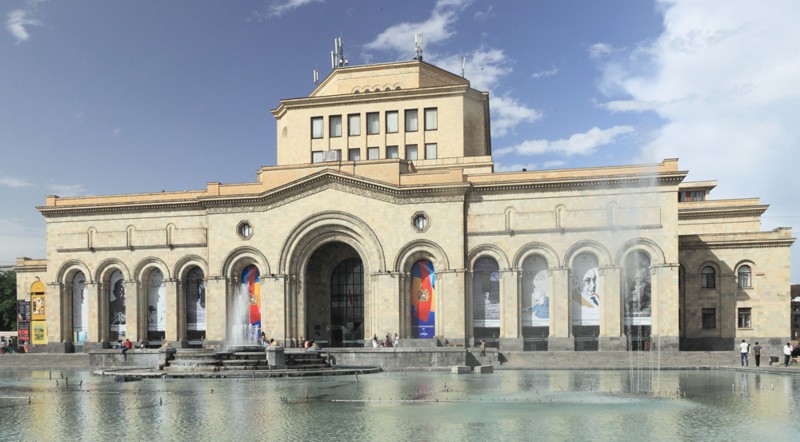
GUIDED TOUR TO THE HISTORY MUSEUM OF ARMENIA
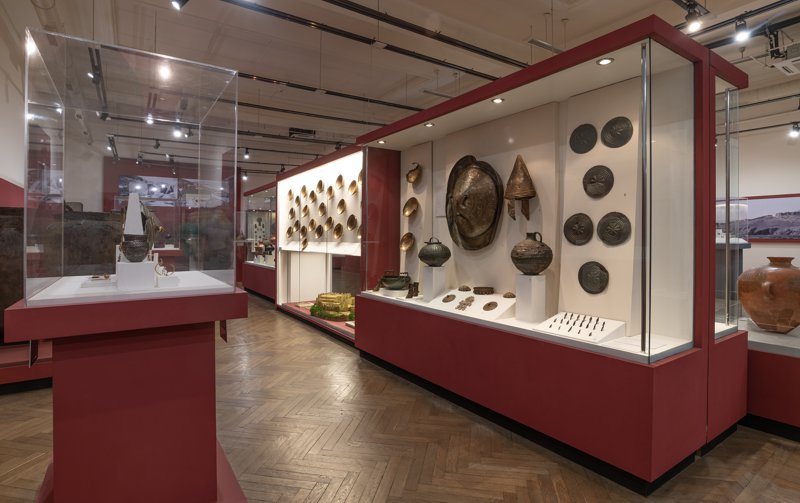
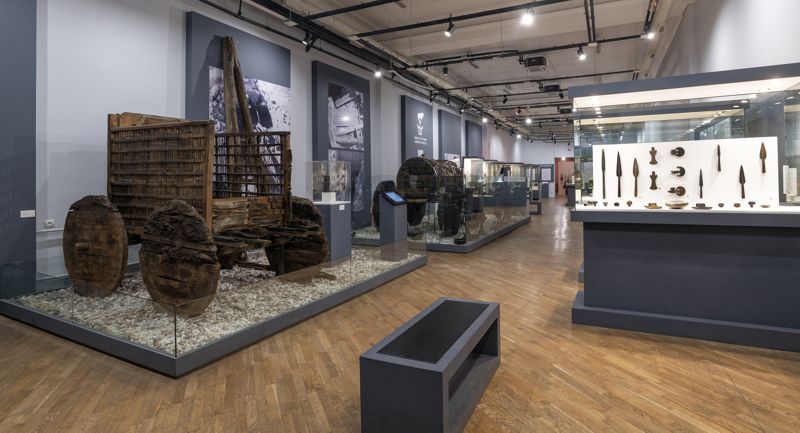
The History Museum of Armenia is a nationally significant cultural institution dedicated to preserving and showcasing Armenia’s heritage. With a collection of over several hundreds of artifacts spanning from Paleolithic times to today, the museum serves as a bridge between the past and the future, contributing to science, education, and tourism.
MID CONFERENCE FIELD TRIP 1: ONE DAY, INCLUDING ARTENI OBSIDIAN SOURCE AND BAROZH-12 MIDDLE PALEOLITHIC SITE
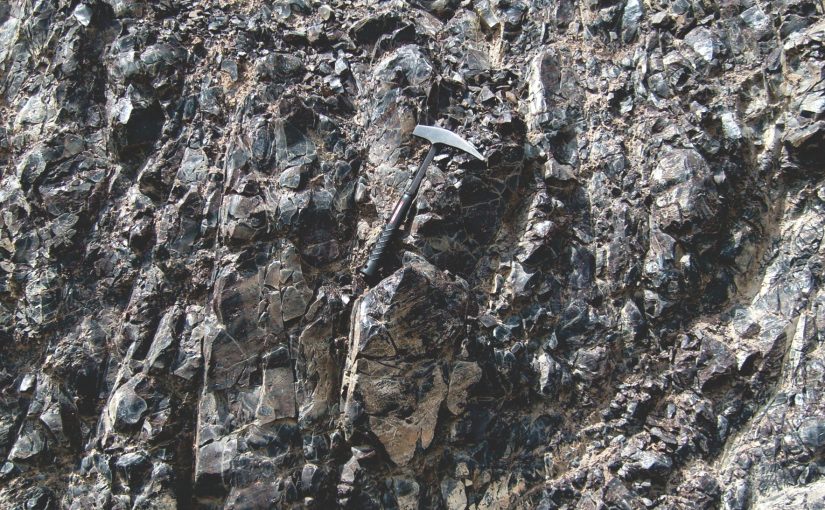
Arteni rhyolite (obsidian) volcano
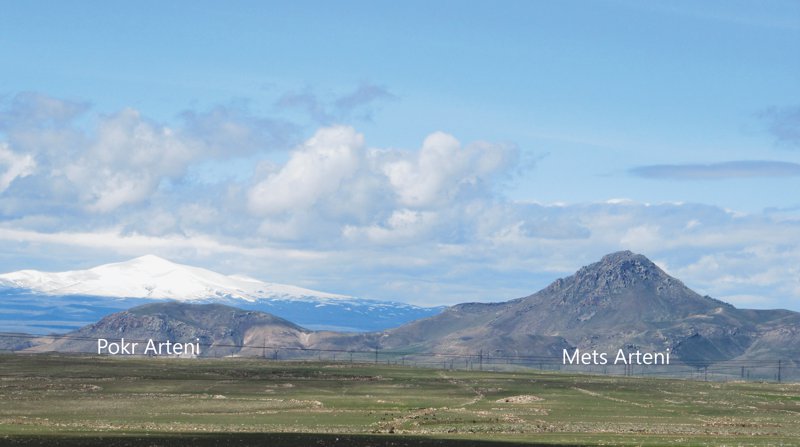
Arteni volcanic complex is located within Aragats volcanic province. The age of Arteni rhyolites considered to be Early Pleistocene; K-Ar ages are: for Mets Arteni 1.45–1.5 Ma (Chernishev et al., 2002); fission track ages –1.27 Ma (Oddone et al., 1999) and 1.26 Ma for Pokr Arteni (Lebedev et al., 2011). Thus, rhyolitic eruptions and the formation of domes of Arteni volcano correspond to the Early Pleistocene. Eruption products of Arteni volcano are covered by more recent Middle Pleistocene andesitic lava flows of neighboring Ddmasar cinder cone and ignimbrites of Aragats stratovolcano.
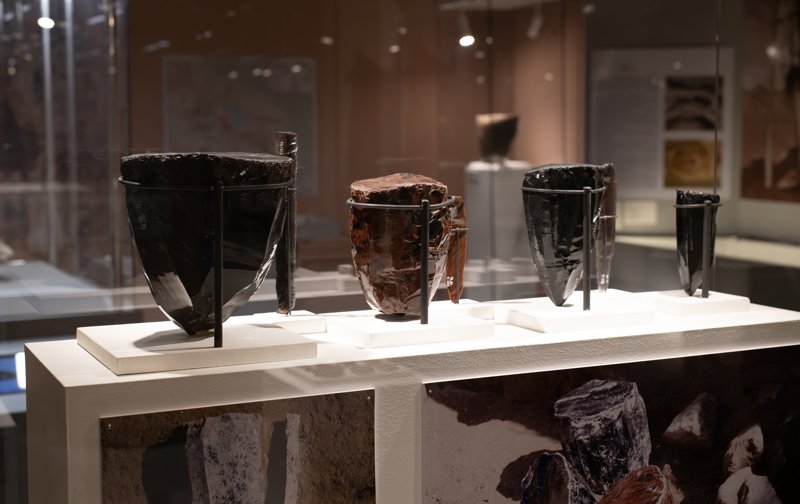
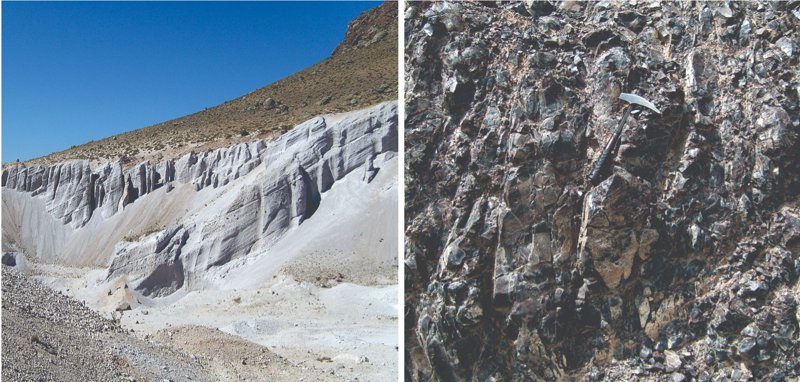
Arteni is the most compound rhyolitic volcanic complex in Armenia, and it consists of two independent rhyolitic volcanoes: Mets (Big) and Pokr (Little) Arteni (2047 and 1754 m asl, respectively). Volcanic activity began with an eruption of perlite-pumice pyroclastics, followed by eruptions of detrital perlite and zonal obsidian that flowed westward and southward; shorter flows also went northward. Arteni obsidian is of high quality; “smoky quartz” of the translucent, reddish-brown, black, and other varieties are known.
Barozh-12, Middle Paleolithic open-air site and obsidian workshop
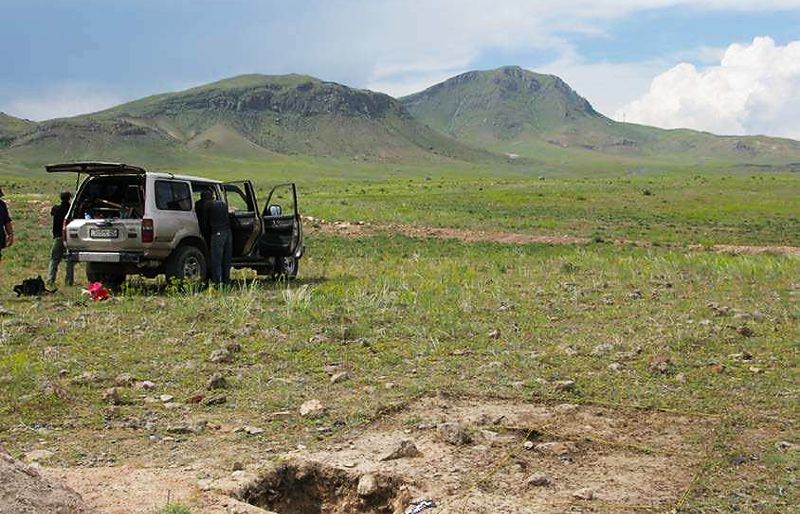
Located in western Armenia, at the edge of the Ararat Depression near the Mt Arteni volcano, the open-air Middle Paleolithic site of Barozh-12 was excavated by an international–Armenian archaeological team from 2009 – 2014 (Glauberman et al., 2020a, b). This site yielded significant data on Late Middle Paleolithic technology, land use, and hominin behavior in a region that has heretofore been little explored. The lithic assemblage appears similar to those from other contemporaneous Middle Paleolithic sites in the region, and luminescence age estimates indicate the site was occupied around 60 – 31 ka, the time range when archaic and anatomically modern humans may have overlapped temporally and/or geographically. Barozh-12 is a large, high-density Middle Paleolithic site. A total of 4.85 m3 of excavated sediments yielded 17,317 obsidian artifacts with densities ranging from 1600–5200 artifacts / m3 according to stratigraphic unit.
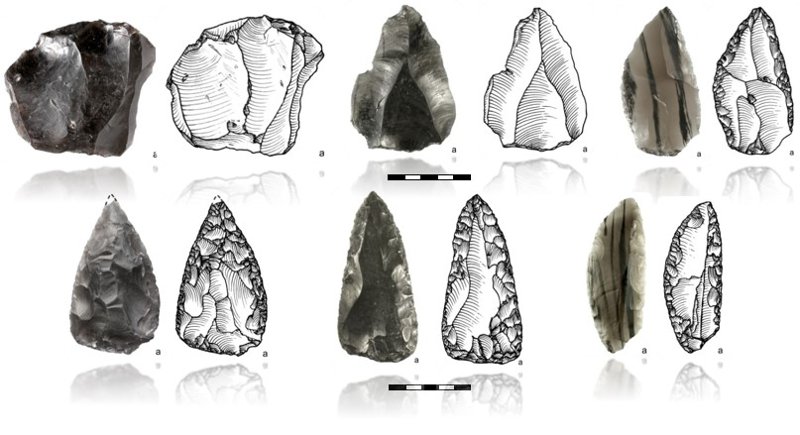
Unidirectional-convergent and unidirectional Levallois core reduction techniques dominate in the core and flake assemblage, and retouched pieces are numerous. These are mainly retouched Levallois points and convergent and other unifacial scraper forms on Levallois blanks.
Surface and excavated artifacts are of all size classes and technological categories, including tool re-sharpening flakes and core trimming elements. Artifacts class frequencies and cortex analysis also suggest that all stages of core reduction and tool use, maintenance and discard occurred on site. While artifact assemblage analysis also reveals that site occupation intensity varied over time at the site.
The extent of a ‘raw material exploitation territory’ is suggested by obsidian sourcing. Results of portable X-Ray fluorescence (pXRF) analysis of samples of obsidian artifacts from all strata (n = 318) indicate that most were manufactured from local (1 – 2 km) Pokr and Mets Arteni material, while a smaller number of mainly retouched artifacts were manufactured on material that originates between 40 and 190 linear km away. Artifact transports overlap with sources in the Armenian Highlands and eastern Anatolia, and other Middle Paleolithic sites within the same time range. Interestingly, obsidian sourcing at the Upper Paleolithic site of Aghitu-3, around 200 km to the south of Barozh-12 also shows exploitation of the same obsidian sources. This suggests overlapping mobility ranges of hominins that employed both Middle and Upper Paleolithic technologies in the region starting around 40 ka.
References
Glauberman, P., Gasparyan, B., Wilkinson, K., Frahm, E., Nahapetyan, S., Arakelyan, D., Raczynski-Henk, Y., Haydosyan, H., Adler, D.S., 2020a. Late Middle Paleolithic technological organization and behavior at the open-air site of Barozh 12 (Armenia). Journal of Paleolithic Archaeology 3, 1095-1148.
Glauberman, P.J., Gasparyan, B., Sherriff, J., Wilkinson, K., Li, B., Knul, M., Brittingham, A., Hren, M.T., Arakelyan, D., Raczynski-Henk, Y., Nahapetyan, S., Haydosyan, H., Adler, D.S., 2020b. Barozh 12: formation processes of a late Middle Paleolithic open-air site in western Armenia. Quaternary Science Reviews 236, 106276, 1-23.
MID-CONFERENCE FIELD TRIP 2: GARNI HELLENISTIC TEMPLE, COLUMNAR JOINTS LAVA FLOW, GEGHARD MONASTERY, GUTASNAR OBSIDIAN SOURCE
Garni and Geghard
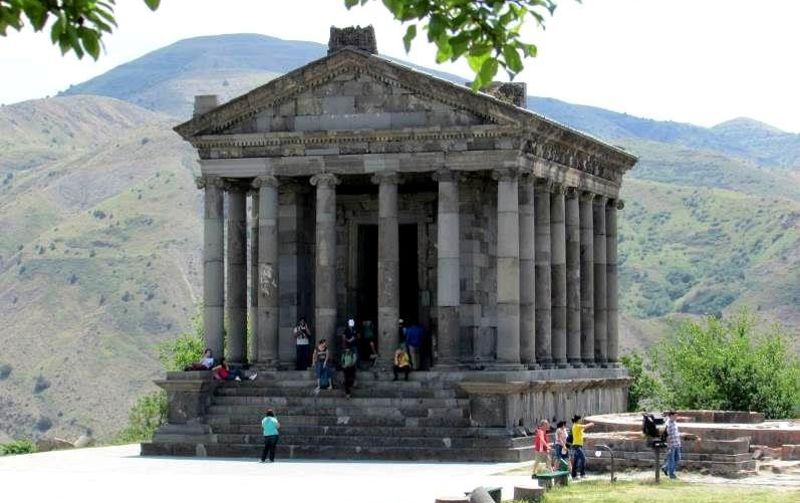
- Visit to 1st century AD Classical Hellenistic temple of Garni.
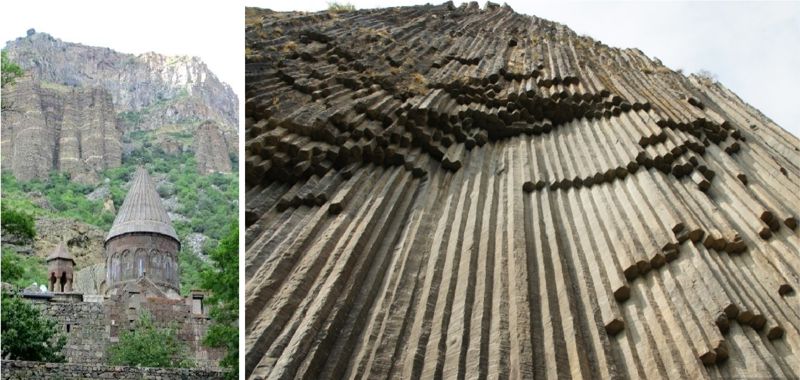
- Visit to gorge of Azat River, spectacular columnar joints lava flow and Garni active fault.
- Visit to 4th – 13th Century AD Geghard monastery and view of Voghjaberd volcanoclastic suite of Upper Miocene – Pliocene age.
- Gutansar volcano and obsidian outcrops.
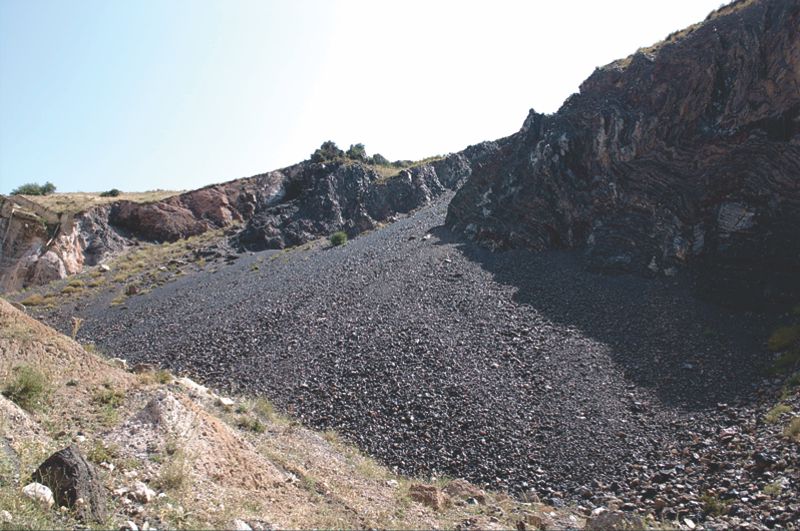
Obsidian outcrop on the Yerevan-Sevan highway